
Description
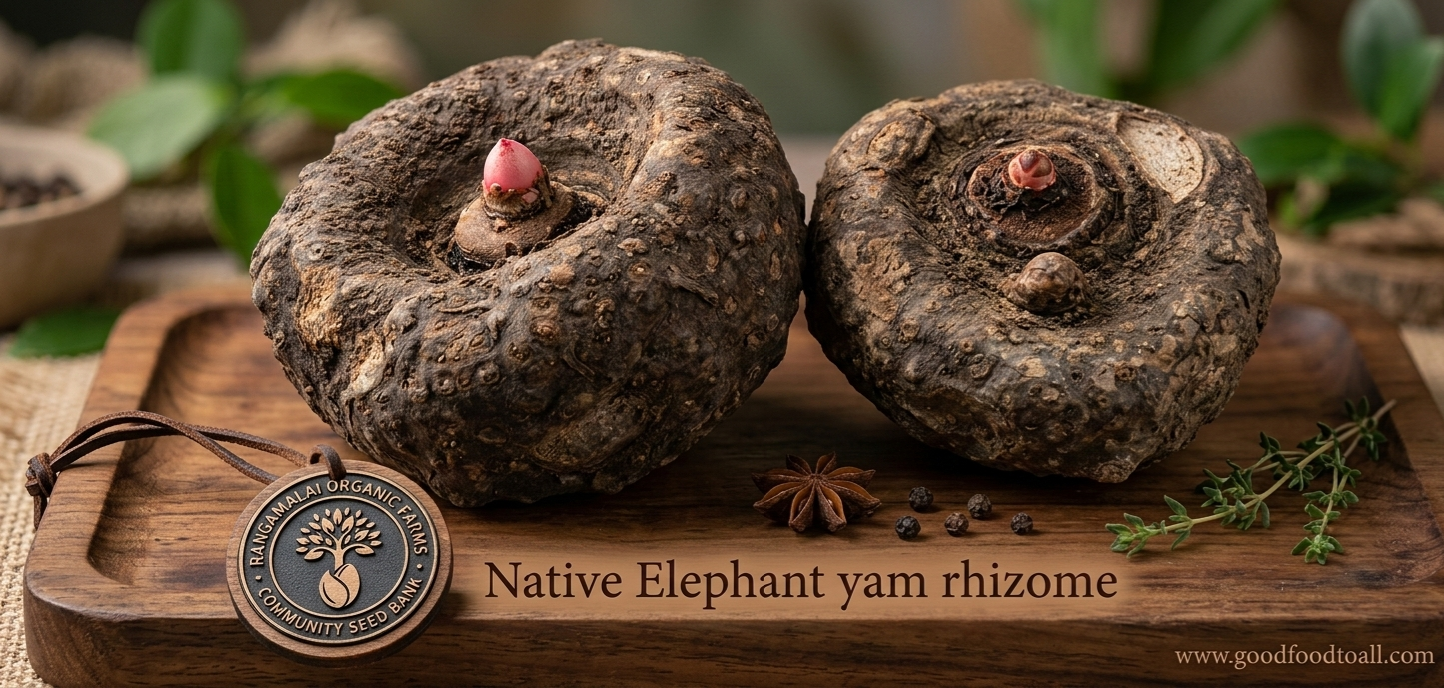
Elephant foot yam (Amorphophallus paeoniifolius) isn’t typically cultivated using true botanical seeds. Instead, it is vegetatively propagated using pieces of the corm (the tuber itself).
Here is a quick guide on preparing and planting elephant foot yam “seeds” using natural farming methods:
Selecting and Preparing the Corms
- Selection: Choose healthy, disease-free, and well-matured corms from a previous harvest.
- Cutting: Slice the corm into smaller pieces. For a good yield, each cut piece should ideally weigh between 500 grams and 1 kilogram.
- The Bud: It is critical that every cut piece retains at least one prominent, healthy apical bud (the growing tip) to ensure sprouting.
- Natural Seed Treatment
Because the freshly cut corms are prone to rotting and fungal infections in the soil, they need to be treated before planting: - Cow Dung Slurry: Dip the cut corm pieces in a thick slurry of fresh cow dung and cow urine, then allow them to dry in the shade for a day or two.
- Ash Application: Rubbing wood ash onto the freshly cut surfaces helps seal the wounds and naturally deters pests and fungi.
- Bio-agents: Incorporating beneficial fungi like Trichoderma viride or Pseudomonas fluorescens into the slurry provides an excellent shield against soil-borne pathogens.
- Planting Basics
- Soil Requirements: They require deep, well-drained, and fertile soil. They are highly sensitive to waterlogging, which will cause the corms to rot.
- Preparation: Plant the treated corms in pits (usually around 60x60x45 cm) that have been enriched with generous amounts of well-rotted farmyard manure, compost, or vermicompost.
Elephant Yam Tuber corm




Reviews
There are no reviews yet.