Description
Six Heirloom Turmerics
One Living Garden
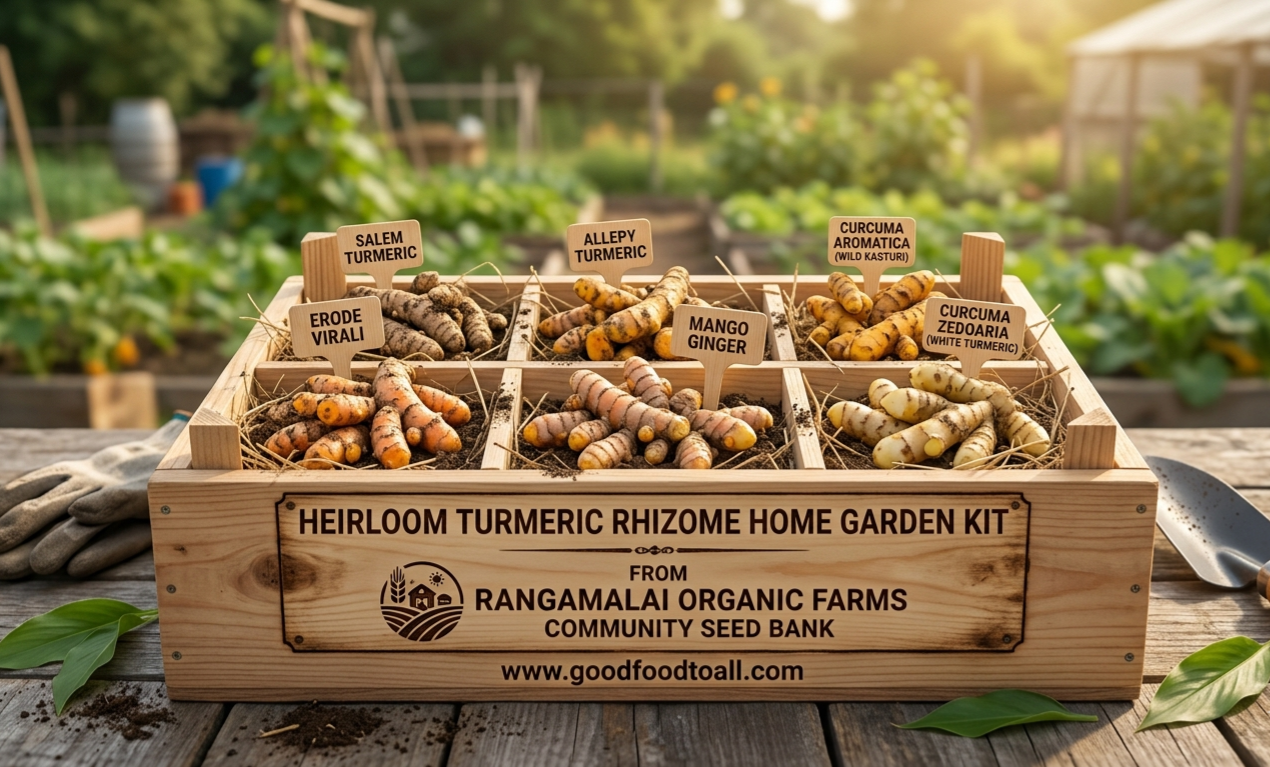
A natural-farmed rhizome starter kit gathered from South India’s vanishing turmeric heritage — six distinct varieties, 250g each, ready to plant and grow into a year’s worth of fresh, golden harvest from your own backyard.
A Vanishing Heritage
Your grandmother grew at least three of these
For thousands of years, Tamil households didn’t grow “turmeric” — they grew turmerics, plural. Different varieties for the kitchen, for the bridal bath, for the medicine pouch, for the festival meal. Modern monocultures have collapsed all that diversity into a single yellow powder. This kit is a small act of restoration.
Of the dozens of turmeric varieties our ancestors knew by name and purpose, fewer than a handful are still commercially grown today. To plant a Mango Ginger or a Kasturi Manjal in your garden is to keep an entire chapter of Tamil food and skin culture alive. — From the Manvasanai seed bank notes
Inside the Kit
Six varieties · six distinct personalities
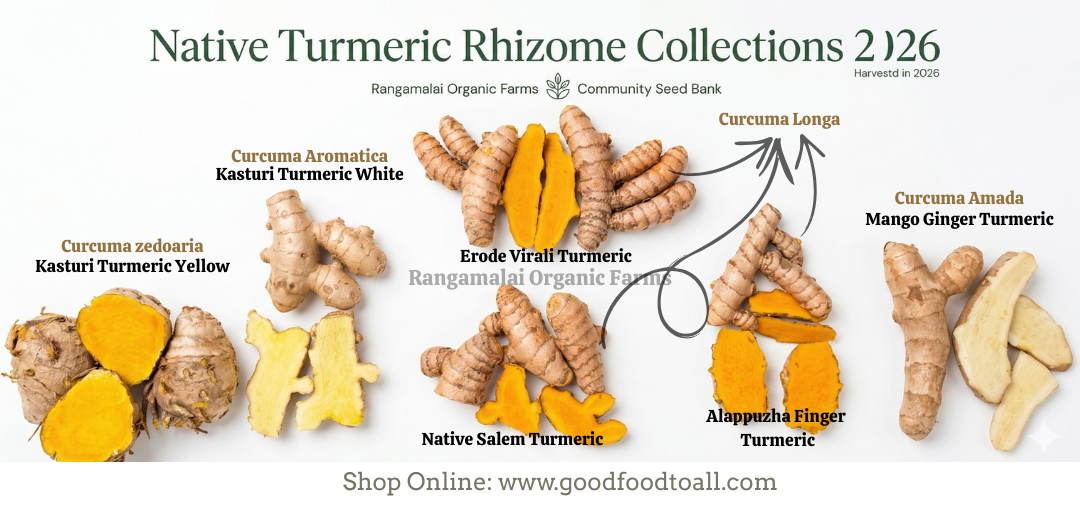
Each variety has its own colour, aroma, growing habit and place at the table. We’ve chosen six that together cover everything a South Indian household has traditionally needed — kitchen, skin and apothecary.
Salem Turmeric
சேலம் மஞ்சள்
Curcuma longa · Salem strain
Tamil Nadu’s most beloved kitchen turmeric. Deep golden flesh, robust earthy aroma, and the rich curcumin content that gives sambar, rasam and everyday masalas their warm glow. The everyday workhorse.
Daily CookingErode Virali Turmeric
ஈரோடு விராலி மஞ்சள்
Curcuma longa · Erode Virali
From Erode — the celebrated “Turmeric City” of India. This long-fingered variety carries a GI tag and is prized for its intense colour, slender form and exceptional curcumin. The gold standard of South Indian kitchens.
Premium CookingAlleppey Finger Turmeric
ஆலப்புழா மஞ்சள்
Curcuma longa · Alleppey
A Kerala heirloom celebrated worldwide for its bright orange flesh and exceptional curcumin content. The variety chefs and herbalists actively seek out — equally at home in golden milk, healing pastes and slow-cooked curries.
High CurcuminMango Ginger
மாங்காய் இஞ்சி
Curcuma amada
Slice it open and the kitchen smells of raw mango. A summertime treasure for tangy thokku, fiery pickles and refreshing pachadi. Looks like ginger, behaves like turmeric, tastes like neither — completely its own thing.
Pickles · ChutneysKasturi Turmeric
கஸ்தூரி மஞ்சள்
Curcuma aromatica
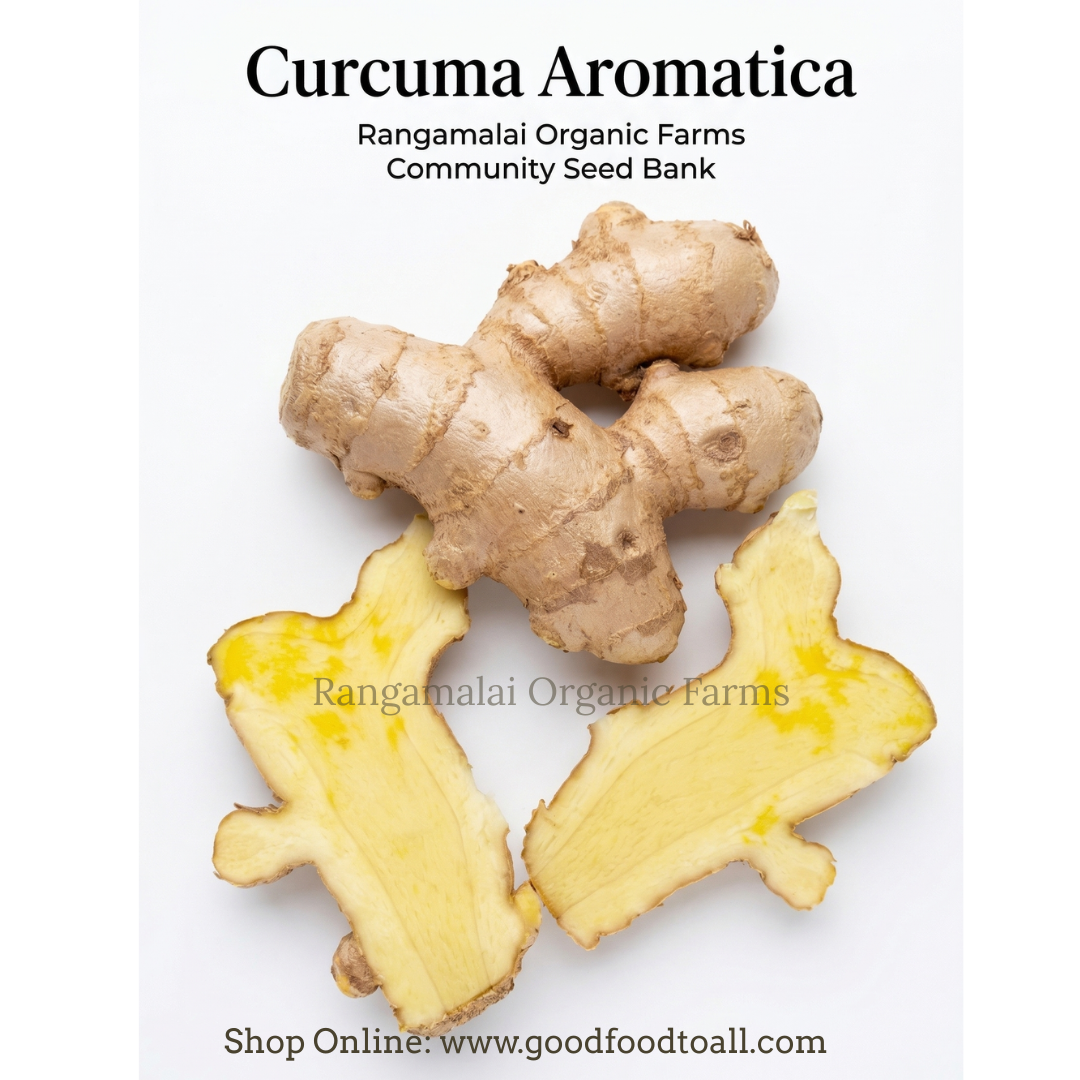
The skin-care turmeric. Beloved across South India for ubtans, face packs and the bridal bathing ritual — fragrant, soft-toned and never used in food. A bride’s friend, a grandmother’s secret, now growing in your courtyard.
Skin & BeautyWhite Turmeric
பூலான்கிழங்கு
Curcuma zedoaria
A rare medicinal cousin with white-fleshed rhizomes and a clean, camphor-like aroma. Long valued in Siddha and folk traditions for digestion, breathing and skin troubles. The healer of the kit — and increasingly hard to find.
Siddha · MedicinalSix varieties · 250 g each · sealed for freshness
Hand-selected mother rhizomes, lightly cured and packed in breathable kraft pouches with a printed planting card for each variety.
Why Grow Your Own
Six reasons your kitchen will thank you
Turmeric is one of the most rewarding plants for Indian home gardens — beautiful broad leaves, low maintenance, and a harvest you can store for an entire year.
Planting Guide
A simple five-step ritual
Turmeric is wonderfully forgiving. Plant once between April and June, water gently, and let monsoon do most of the work.
Fill pots or beds with loose, well-drained soil mixed with compost.
Break each rhizome into 30–50g pieces, each with at least one bud.
Place pieces 2 inches deep, bud facing up, 9–12 inches apart.
Keep soil moist, not soggy. Partial shade is ideal.
Wait 8–9 months. When leaves yellow and dry, the rhizomes are ready.
More Details
Everything a home gardener needs to know
Kit specifications
| Total weight | 1.5 kg of rhizomes (6 × 250 g) |
| Varieties | Salem · Erode Virali · Alleppey · Mango Ginger · Kasturi · White Turmeric |
| Rhizome pieces | Approx. 5–10 plantable pieces per variety |
| Coverage | Sufficient for 30–50 plants in a home garden |
| Expected yield | 8–15 kg of fresh turmeric (variety dependent) |
| Cure status | Light cure · plantable · not for direct cooking |
| Packaging | Breathable kraft pouches with variety labels |
Growing conditions — soil, sun & water
- Soil: Loose, loamy, well-drained, rich in organic compost. Avoid heavy clay or waterlogged spots.
- Sun: Partial shade is ideal — 4–6 hours of indirect or filtered sun. Full harsh sun stresses the leaves.
- Water: Consistently moist, never soggy. Reduce frequency once monsoon begins. Stop watering 2–3 weeks before harvest.
- Temperature: Thrives between 25–35°C. Tolerates higher heat with good shade and moisture.
- Container size: Minimum 12-inch deep pot or 15-litre grow bag per plant. Bigger containers = bigger rhizomes.
The growing calendar — month by month
| April – June | Plant rhizomes · daily light watering |
| July – August | Sprouts emerge · monsoon takes over watering |
| September – October | Vigorous leaf growth · light feeding with compost |
| November – December | Plant matures · rhizomes bulk up underground |
| January – February | Leaves yellow and dry · stop watering · ready to harvest |
| February – March | Lift, clean, cure or use fresh · save best for next year |
Care & common troubleshooting
- Yellowing leaves early: Usually overwatering. Let soil dry slightly between sessions.
- No sprouting after 4 weeks: Soil may be too cool or too dry. Check for buds; they should be firm and unblemished.
- Pests: Turmeric is naturally pest-resistant. Occasional aphids respond well to neem-water spray.
- Feeding: A monthly handful of compost or vermicompost is plenty. Avoid synthetic fertilisers.
- Mulching: A 2-inch layer of dry leaves or coir helps retain moisture and suppress weeds.
Harvest & storage
- Use fresh: Refrigerate in an open container for up to 3 weeks.
- Cure & store: Boil for 30–45 minutes, sun-dry for 10–15 days until rock-hard. Stores for 2–3 years.
- Save for next season: Set aside the firmest, healthiest rhizomes — store them in dry sand or sawdust until April.