
Description
Ten Heirloom Tomatoes
One Living Garden
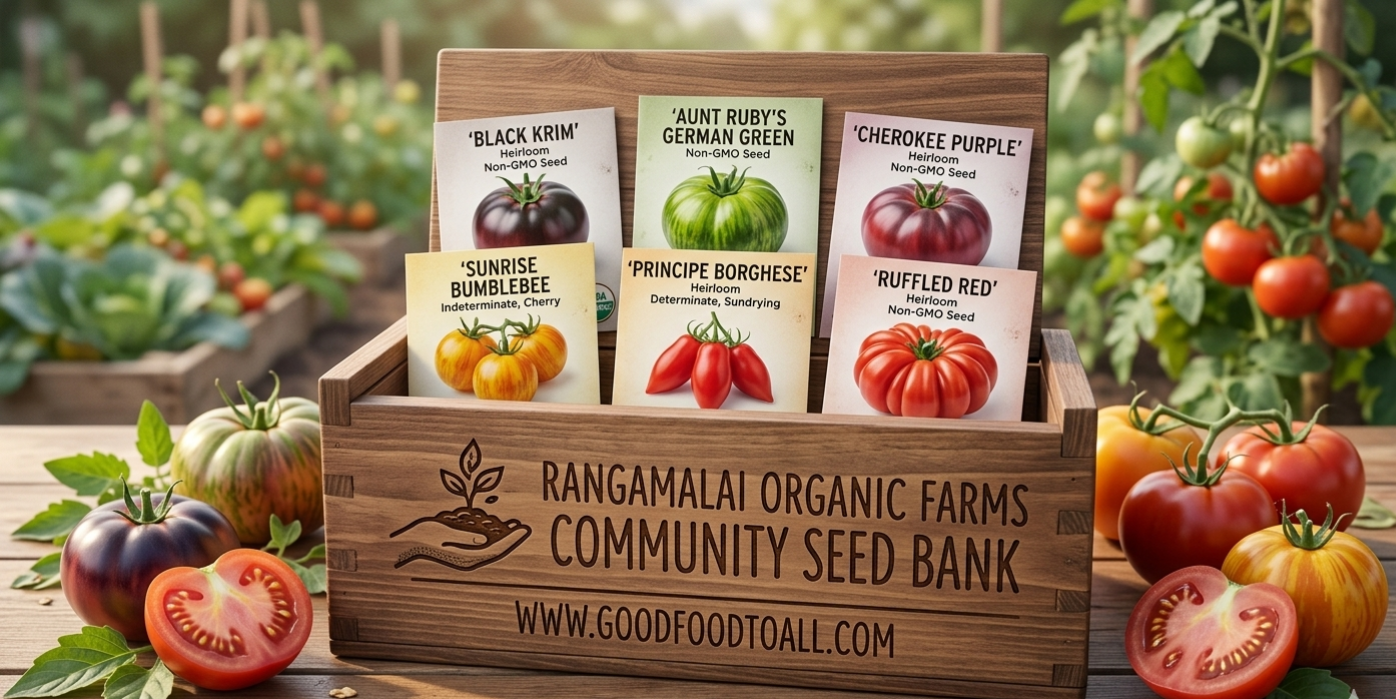
A curated kit of ten rare, open-pollinated tomato varieties — gathered from India, France, America, West Africa and the hills of Nagaland. Every colour, every shape, every flavour your kitchen has been missing.
The Flavour Problem
Why supermarket tomatoes
taste like nothing
F1 hybrid tomatoes are bred for one job — surviving a 2,000-kilometre journey from farm to your kitchen. Thick skin, uniform size, long shelf life, picked green. Flavour was never in the brief. Heirlooms are the opposite: bred over centuries by gardeners who actually had to eat them.
A real heirloom tomato — a true Naati, a Marmande off the vine, a Black Krim still warm from the sun — doesn’t taste like the red orbs in plastic trays. It tastes the way fruit is supposed to taste. Once you grow your first, you’ll understand why every gardener becomes a tomato gardener. — From the Manvasanai Community Seed Bank
The Collection
Ten varieties · ten distinct flavours
A balanced collection covering daily cooking, Sunday salads, summer slicing, slow-cooked sauces, and the cherry-vine snacking your kids will steal straight off the plant.
Naati Tomato
Tamil NaduThe local Tamil tomato — small, deeply red, gently tangy. The soul of every authentic rasam.
Ananji
Indian · ★★★★★A prolific Indian heirloom — generous yields, deep red skin, balanced acidity for everyday cooking.
Kashi
Indian · ★★★★★A robust North-Indian heirloom selected for disease-resistance and concentrated flavour. Reliable in heat.
Doyang
Nagaland · ★★★★★A rare Naga heirloom from the Doyang river valley. Deeply red, intensely savoury — used in smoky northeastern stews.
Marmande
French HeirloomThe legendary French ribbed beefsteak. Meaty, sweet, juicy — the gold standard of European tomato sandwiches.
Beefsteak
American · ★★★★★The classic American slicer. Massive, meaty fruits with thick walls — a single tomato makes a whole burger.
Togo Trufle
Liberian · ★★★★★A rare West-African heirloom with mahogany-dark flesh and an earthy, almost smoky depth. A connoisseur’s tomato.
Zebra Tomato
SpecialtyStunning green-and-orange striped fruits. Sweet, low-acid, eye-catching — the showpiece of any plate.
Red Cherry
Round · ★★★★★Vining clusters of bite-sized fruits. Bursts of sweet-tart juice — the snacking tomato kids steal off the plant.
Yellow Cherry
SpecialtyGolden cherries that taste like sunshine — sweeter and milder than red, with almost no acidity. Children’s favourite.
10 seed packets · individually labelled · ready to sow
Each variety hand-cleaned, stored using traditional methods, sealed in moisture-resistant pouches with a sowing reference card.
Free Companion Guides
Two essential reads
before your first sowing
Tomato seeds are notoriously fussy about timing and treatment — and equally rewarding when you get it right. Both guides below are free and turn first-time tomato growers into confident harvesters.
Seed Treatment Guide
The 24-hour pre-soak ritual that transforms tomato germination. Includes the traditional cowdung-slurry method our farm has used for generations — especially valuable for old-stock heirloom seeds.
Read the guideSeed Sowing Calendar
A complete South Indian planting calendar across SW Monsoon, NE Monsoon, Summer, and year-round windows. Tomatoes have two prime windows per year — the calendar tells you exactly when each starts.
View the calendarCook’s Pairing Guide
Which tomato for which dish?
Each of the ten varieties has a calling. This is the chef’s pairing chart — print it, stick it on the fridge, and use it for the next ten years.
From Seed to Sandwich
A simple five-step ritual
Tomatoes are forgiving once they’re past the germination phase. Follow these five steps and you’ll harvest by month four.
Sow in seed trays. Transplant when seedlings reach 4–6 inches.
Tomatoes need support. Stake or trellis as plants grow.
Save seeds from your healthiest fruits. Plant again next year.
Why Heirloom Tomatoes
Three reasons home gardeners
never go back
We’ve sent these seeds to thousands of home gardens. The same three things keep showing up in the reviews.
F1 hybrids are bred for shelf life and uniform colour, not flavour. Heirlooms were selected over centuries for taste alone. Your first naatu tomato will permanently change what “tomato” means to you.
These are the real, unmodified seeds your great-grandparents grew — saved, sun-dried and stored using traditional methods on our farm. Never coated, never gene-edited, never F1.
Save seeds from each year’s best fruits, share them with friends, and you’ll never need to buy these varieties again. This is how Indian agriculture worked for thousands of years.
Buy once. Grow ten varieties forever.
Every fruit in this kit will give you next season’s seeds. We send them in modest quantities not because we’re stingy — but because we want every gardener who buys from us to become a seed-keeper themselves. Save. Share. Sow again. This is how 230 native varieties stay alive.
More Details
Everything a tomato grower
needs to know
Full kit contents
| Variety | Origin | Type |
|---|---|---|
| Naati Tomato | Tamil Nadu, India | Small slicing |
| Ananji | India · 5★ rated | Medium slicing |
| Kashi | India · 5★ rated | Medium slicing |
| Doyang | Nagaland · 5★ rated | Deep red specialty |
| Marmande | France | Ribbed beefsteak |
| Beefsteak | USA · 5★ rated | Large slicer |
| Togo Trufle | Liberia · 5★ rated | Dark heirloom |
| Zebra Tomato | Specialty | Striped salad |
| Red Cherry (Round) | Specialty · 5★ | Cherry vining |
| Yellow Cherry | Specialty | Yellow cherry vining |
Each packet contains enough seeds for 8–15 plants depending on variety. Note: Based on availability, specific varieties may rotate seasonally.
When to plant — South Indian tomato windows
| Window | Sow Seeds | Harvest |
|---|---|---|
| Southwest Monsoon | June – August | September – December |
| Northeast Monsoon | October – December | January – March |
| Avoid | April – May (peak heat) | — |
Growing period: 80–100 days from sowing to first harvest. For exact sowing weeks and your region’s specifics, see our complete Seed Sowing Calendar →
Seed treatment — pre-soaking for tomatoes
- Water soak (24 hours): Submerge seeds in clean room-temperature water overnight. Rinse before sowing. Standard method, works for all 10 varieties in this kit.
- Cowdung slurry (48 hours): Mix fresh cow dung with water to a thin paste; immerse seeds; rinse before sowing. Adds beneficial soil microbes — gives heirloom seeds an extra germination edge.
Read our complete Seed Treatment Guide → for full instructions.
Where can I grow these — pots, beds or open ground?
- Pots & grow bags: Minimum 12-inch deep, 18-litre size per plant. Cherry varieties (Red & Yellow Cherry, Zebra) thrive in slightly smaller pots.
- Raised beds: Excellent for slicers (Beefsteak, Marmande, Doyang). Space plants 18–24 inches apart.
- Open ground: Ideal for the indeterminate varieties (most cherries) which keep climbing all season.
- Sun: Tomatoes need 6+ hours of direct sun daily. Less sun = fewer fruits.
- Support: All varieties benefit from staking, caging, or a trellis. Cherry varieties are vigorous climbers — give them height.
Care, watering & pest management
- Watering: Deep watering 2–3 times a week beats daily shallow watering. Water at the base, not the leaves — wet leaves invite fungus.
- Mulching: 2 inches of dry leaves or coir at the base prevents soil splashing onto leaves (which carries diseases) and retains moisture.
- Feeding: Vermicompost every 3 weeks. Once flowering starts, switch to a potassium-rich feed like banana peel water or wood ash tea.
- Pruning: Pinch off “suckers” (small shoots in leaf axils) for indeterminate varieties — directs energy to fruits, not foliage.
- Pests: Heirloom tomatoes are naturally more resilient than hybrids. Neem-water spray handles aphids, whiteflies, and fruit borer. Marigolds planted nearby repel nematodes.
How to save tomato seeds — the fermentation method
- Pick a fully ripe tomato from your healthiest plant.
- Squeeze seeds and pulp into a glass jar; add a splash of water.
- Cover loosely; let sit at room temperature for 2–4 days, stirring once daily. A white mould layer will form — that’s correct.
- Add water, swirl, pour off the floating debris. Viable seeds sink.
- Rinse seeds in a strainer; spread on paper to dry for 7–10 days.
- Store in a labelled glass jar in a cool, dry place. Will remain viable for 4–6 years.


